
From Eyeglasses to Engagement: How Warby Parker Turned Social Media into Social Change

In 2010, four classmates at Wharton looked at the eyewear industry and saw a problem hiding in plain sight: prescription glasses were expensive, inconvenient to buy, and locked into a traditional showroom model that hadn’t evolved with consumer behavior. Instead of accepting the status quo, they launched Warby Parker with just $2,500 and a radically different idea to sell stylish, affordable glasses directly to consumers online.
But here’s what makes the story truly interesting: Warby Parker didn’t just disrupt pricing or distribution. They disrupted communication.
From Advertising at Customers to Talking With Them
Traditional eyewear retailers relied on linear communication—ads in magazines, in-store displays, and one-way messaging about quality and prestige. Warby Parker flipped that script. Rather than broadcasting polished promotional messages, they built a transactional communication model grounded in conversation.
On social media, the company actively responds to customer comments, shares user photos, answers questions, and participates in dialogue. Instead of positioning themselves as distant experts, they position themselves as accessible and human. This reflects a key idea from Strategic Social Media: From Marketing to Social Change (Chapter 1): social media isn’t just a distribution channel—it’s a relational ecosystem.
Warby Parker understood early on that trust would be their biggest barrier. Buying glasses online felt risky. Customers were used to trying on frames in-store, adjusting them in person, and getting immediate feedback. So the company created a solution that doubled as a social strategy: the Home Try-On campaign.
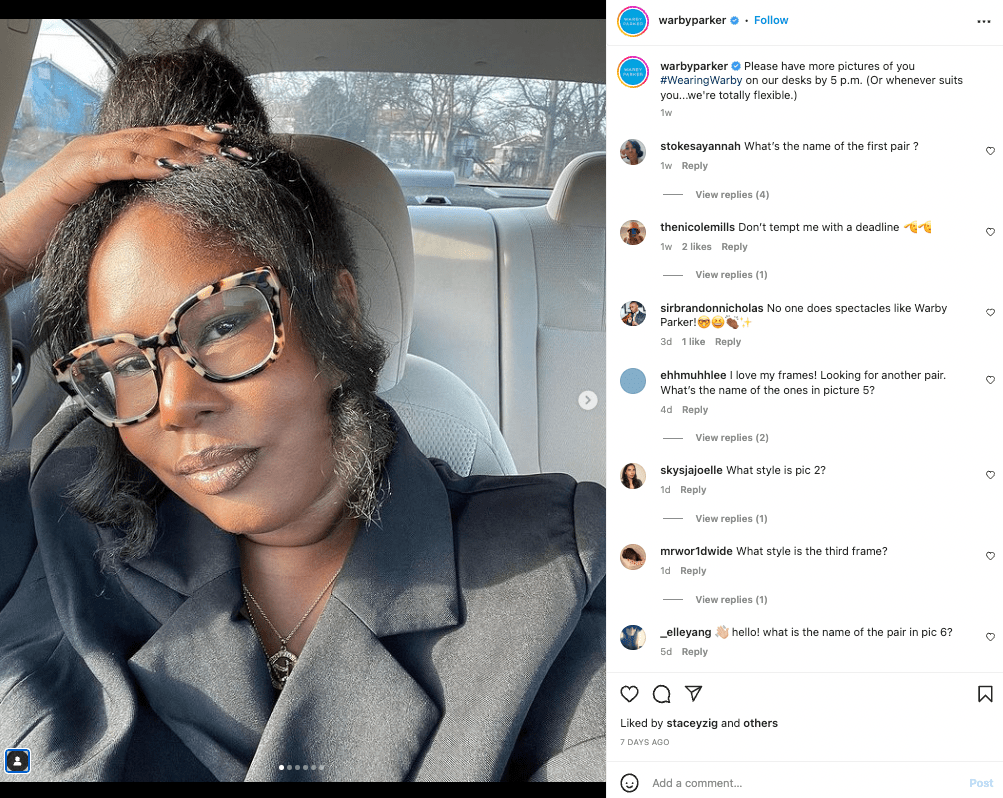
Customers can order five frames for free, try them at home, and return the ones they don’t want at no cost. But here’s where the genius lies: Warby Parker encourages customers to post photos wearing the frames and ask friends for feedback. Suddenly, the purchase decision becomes social. Instead of replacing the showroom, they replaced it with your Instagram feed.
The Power of User-Generated Content
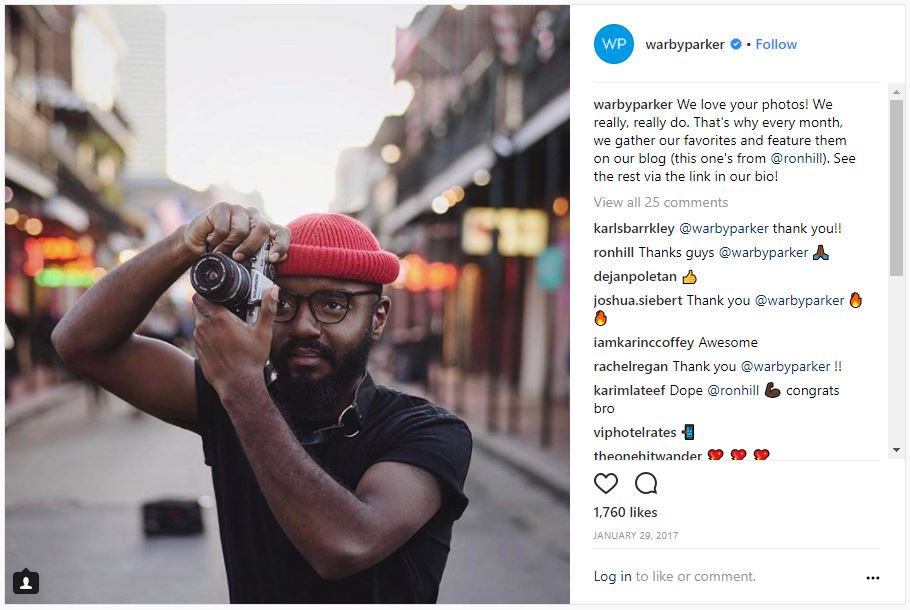
User-generated content (UGC) sits at the center of this strategy. When customers post photos of themselves wearing Warby Parker glasses, they aren’t just sharing style—they’re offering social proof. According to research on social influence (Chapter 2), people are more likely to adopt behaviors when they see trusted peers modeling them.
Warby Parker reported that customers who posted photos during Home Try-On purchased at twice the rate of those who didn’t. That’s not accidental. When a friend comments, “Those look great on you!” it reduces uncertainty. It replaces corporate persuasion with peer validation.
This approach transforms customers into brand advocates. Warby Parker isn’t just marketing to consumers—they’re marketing through them. That shift from persuasion to participation builds loyalty in a way traditional advertising rarely can.
Reducing Dissonance Through Smart Framing
Another major hurdle Warby Parker had to overcome was cognitive dissonance. Glasses aren’t an impulse buy; they’re medical devices and fashion statements combined. Consumers might reasonably think: “If they’re this affordable, are they lower quality?”
Warby Parker addressed this in multiple ways. First, they reduced perceived risk: free shipping, free returns, and at-home trials. Second, they used social media and online video content to provide educational resources about lenses, fit, and style. Instead of avoiding skepticism, they leaned into transparency.
Chapter 3 of Strategic Social Media emphasizes how reframing narratives can reduce psychological discomfort. Warby Parker reframed “cheap glasses online” into “designer-quality glasses without the middleman markup.” That narrative shift matters. It gives consumers a logical and emotional reason to switch brands.
Selling Glasses and a Sense of Purpose
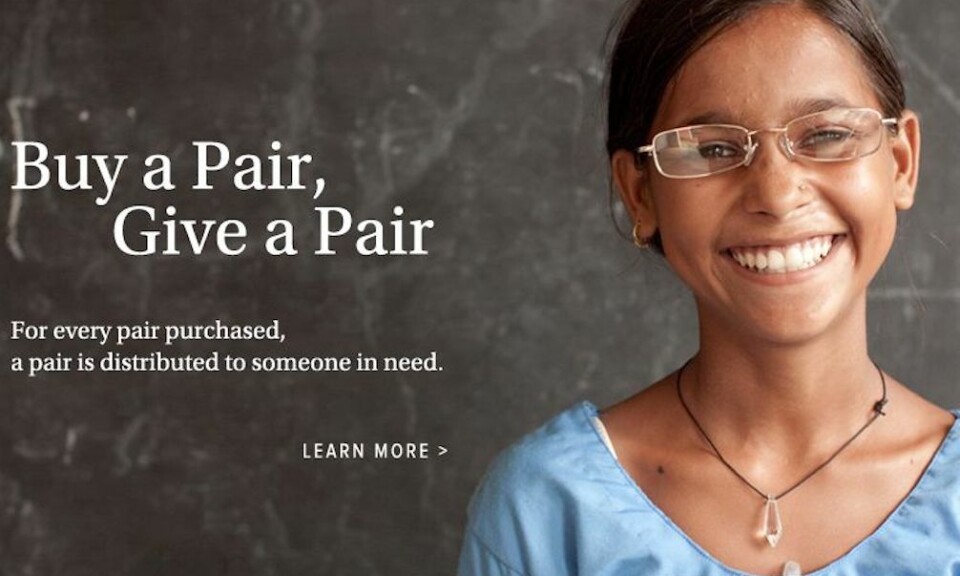
Perhaps the most powerful part of Warby Parker’s strategy is their social impact model. For every pair purchased, they distribute a pair to someone in need through their partnership with VisionSpring. This buy-one-give-one approach reframes consumption as contribution.
Chapter 17 highlights how social media can connect marketing to social change. When customers share their purchase online, they aren’t just showing off new frames—they’re signaling participation in a socially responsible movement. The brand becomes part of their identity.
That matters because identity-driven consumption is sticky. When buying glasses feels like doing good, switching away becomes harder. The purchase isn’t just transactional; it’s moral and communal.
The Bigger Lesson
Warby Parker’s real innovation wasn’t simply selling eyewear online. It was understanding that social media could reduce risk, reshape narratives, and mobilize peer influence all at once.
They moved from linear advertising to relational communication. They leveraged user-generated content to build trust. They reduced dissonance through transparency and risk mitigation. And they aligned their business model with a socially conscious story customers wanted to share.
In doing so, Warby Parker didn’t just disrupt an industry—they demonstrated what strategic social media can accomplish when it’s rooted in conversation, community, and purpose.
The takeaway? Social media works best not as a megaphone, but as a mirror—reflecting customers’ identities, values, and voices back to them.
 Orriel Paul - MKT 555